Water Heater Leaking? Here's What to Do Right Away
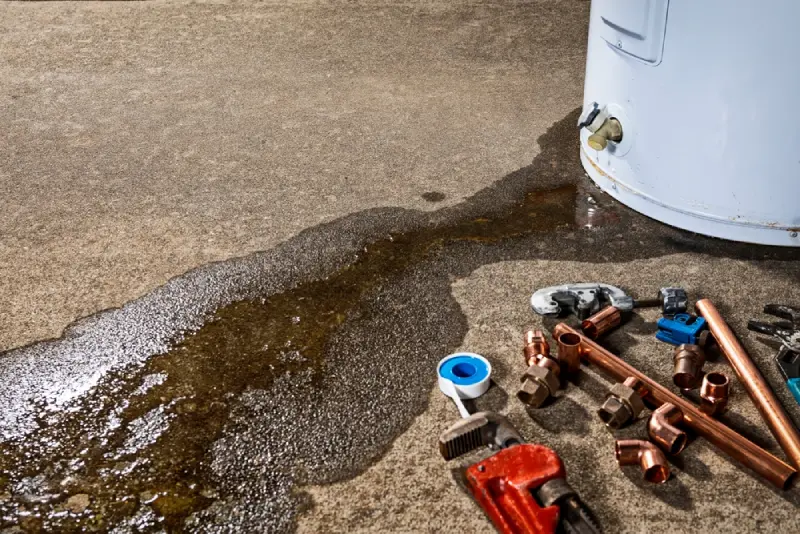
TL;DR: A leaking water heater needs immediate attention. The leak's location helps identify the problem, but shutting off power and water and calling a professional quickly can prevent serious damage and system failure.
- Leak location reveals the cause
- Top leaks are often fittings or valves
- Bottom leaks usually mean tank failure
- Turn off power and water right away
- Call a professional for repairs
Finding a puddle near your water heater isn't something you can ignore. A water heater is leaking for a reason, and that reason matters if you want to avoid bigger problems down the road. Whether it's a small drip or a steady stream, it's important to quickly address the issue to save you from water damage, higher utility bills, and a complete system failure.
The Connection Between Where Your Water Heater Leaks and Why
The location of the leak tells you a lot about what's going wrong. If your water heater is leaking from the top, you're probably dealing with loose inlet or outlet connections.
These pipes carry water in and out of the tank, and over time, the fittings can loosen. Sometimes it's the temperature and pressure relief valve that's the issue. It's designed to release water when pressure builds up too high, but it can also leak if it's faulty or if it wasn't properly installed.
A hot water heater leaking from somewhere in the middle often points to the tank itself. Corrosion eats away at the steel over time, especially if you haven't been flushing sediment regularly. Once the tank develops a crack or hole, there's no patching it—you'll need a replacement.
If your water heater is leaking from the bottom, that's usually the most serious situation. Bottom leaks usually mean the tank's inner lining has corroded through and that water is escaping from the base. The drain valve could also be loose or damaged, which is a simpler fix, but you won't know until a professional looks at it.
What to Do Right Now if Your Water Heater Leaks
The first thing you need to do is turn off the power supply. For electric units, you need to flip the breaker. For gas models, turn the gas valve to the pilot position. This keeps you safe while you're assessing the situation.
Next, shut off the water supply to the unit. There's typically a valve on the cold water line feeding into the tank. Then, turn it clockwise until it stops, as this prevents more water from entering and exacerbating the leak.
Don't try to drain a scalding hot tank right away. Let it cool down for at least an hour, then attach a garden hose to the drain valve and run it to a floor drain or outside. Even if the leak isn't from the drain valve, emptying the tank prevents further damage to your floors and belongings.
When to Call the Professionals
Even if it seems like you can handle it yourself, the leaking could indicate internal corrosion or pressure issues, which means you should call a professional. Professional water heater services include things like inspections, repairs, and safe installation of replacement units when it's necessary.
Final Thoughts
A leaking water heater won't fix itself, and it only makes things worse to wait. By knowing where to look and immediately taking the necessary steps, you can protect your home from extensive damage.
The most effective move is to hire a qualified technician to assess the issue and recommend the best solution for your specific situation.